
Navigating urban streets would be chaos without the silent authority of regulatory signs. Every stop sign, speed limit, or no-parking notice is not just a piece of metal; it is a compact message that keeps order, prevents collisions, and makes city life possible.
The Purpose and Importance of Regulatory Signs in Urban Traffic
Regulatory signs are the backbone of traffic law enforcement in cities. They communicate obligations and restrictions to drivers, ensuring that everyone follows the same rulebook. More than just reminders, these signs have the force of law behind them. Ignoring a yield sign or a posted speed limit can result in fines or more serious legal consequences. Their strategic presence on every corner, intersection, or curb is no accident, it is the outcome of studies, legal statutes, and urban planning focused on safety.
When placed correctly, regulatory signs are proven to reduce accidents and improve compliance. For example, studies have shown that the introduction of well-positioned speed limit and pedestrian crossing signs in high-density neighborhoods can lower incidents by up to 30%. The real power of these signs lies in their ability to influence driver behavior at just the right moment.
Urban areas rely on a collection of common regulatory signs. Stop and yield signs dictate who proceeds first at intersections; speed limit signs control the pace of traffic; no-parking and turn restriction signs manage where cars can stop or change course; and school zone or pedestrian signs protect the most vulnerable.
Installation Standards and Practices: A Comparative Overview
Not every sign is created equal, and how it is installed makes all the difference. In Ontario, for example, the Ontario Traffic Manual (OTM) and OPSS specifications set the gold standard for regulatory sign installation. These documents detail not just where signs should be placed, but also exact measurements for height, setback from the road, and even the angle of orientation.
Municipalities may introduce additional requirements, especially in areas with unique road layouts or pedestrian concerns. While provincial roads often have standardized approaches, cities may tailor their installations to local needs, creating subtle but important differences.
Temporary and permanent sign installations each pose distinct challenges. Temporary signs (often for construction) must be both stable and easily moved, while permanent signs require deep foundations and special weather-resistant hardware.
Height, Placement, and Orientation: Ensuring Maximum Visibility
Visibility is everything. A sign that is too low can be blocked by parked vehicles, while one placed at the wrong setback risks being overlooked entirely. Heights and setbacks follow strict guidelines so that every driver, regardless of vehicle type, can see and react to signs in time.
Another critical factor is orientation. Signs must face approaching traffic directly within the driver’s line of sight. A wrongly angled sign could be missed at a crucial intersection. Compare the impact: a correctly placed stop sign prevents confusion, while one angled away can lead to collisions.
Improper installations have real-world consequences. Case studies in Ontario reveal that misaligned signs or those installed at non-standard heights frequently result in increased traffic violations and at-fault accidents. In contrast, strict adherence to standards consistently delivers safer outcomes.
Regulatory Signage in Construction Zones: Safety and Compliance Considerations
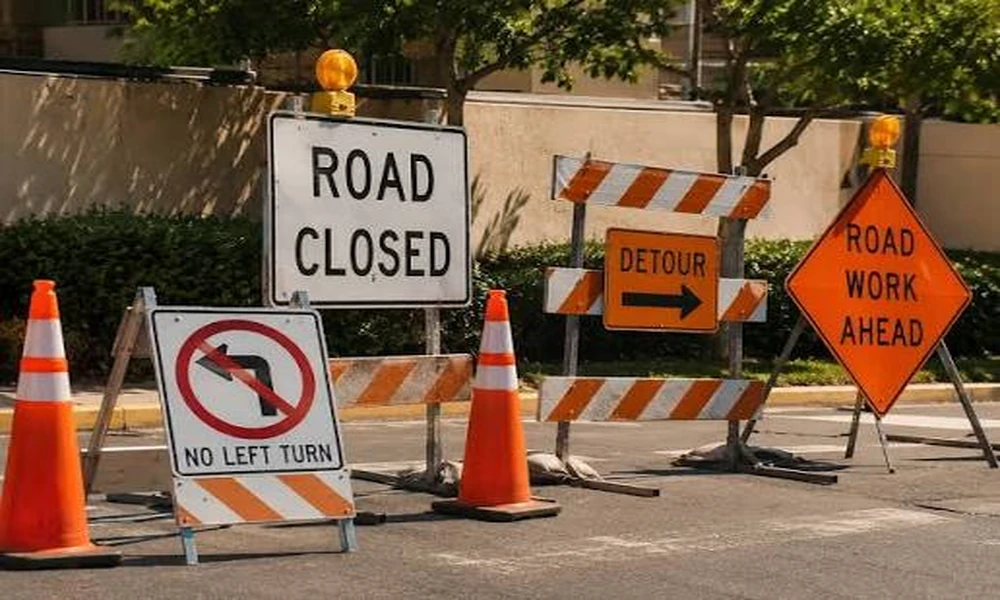
Construction adds another layer of complexity to sign placement. Work zones disrupt the usual flow, demanding clear, temporary regulatory and warning signage. Standard packages typically include advance warnings, lane transition signs, and clear markings of work boundaries.
Short-term projects might rely on portable bases and roll-up signs that can be repositioned as the work zone shifts. Long-term projects, like multi-year road reconstructions, demand sturdier, more permanent solutions. Maintenance is relentless: damaged or moved signs must be replaced without delay to avoid liability.
By prioritizing proper placement, project managers reduce risk not just for drivers, but for workers as well. A misplaced construction sign can be the difference between a safe detour and a dangerous wrong turn.
Technology and Materials in Urban Traffic Sign Installation
Traditional aluminum signs remain common, but innovations are raising the bar for durability. Weather-resistant coatings, anti-twist hardware, and new substrates are now standard in cities facing freeze-thaw cycles and heavy salt use.
Portable bases and roll-up signs offer flexibility, especially for rapid deployment in temporary scenarios. Permanent installations call for deeper posts, corrosion resistance, and designs that minimize the risk of twisting or displacement.
Municipal and Infrastructure Projects: Tailoring Signage to Urban Development
Urban growth demands new regulatory strategies. In new subdivisions, freshly installed signs help shape traffic patterns from day one, while established neighborhoods may require sign upgrades for traffic calming or safety improvements.
Complex projects like LRT corridors or highway interchanges require hundreds of signs, each positioned according to precise engineering drawings. The planning and execution here can make the difference between a smooth flow and daily bottlenecks.
Liability and Safety Risks of Incorrect Regulatory Sign Installation
Small errors can have big repercussions. Among the most common mistakes: signs too close to the curb, incorrect heights, or facing the wrong direction. Each one creates gaps in the safety net. For municipalities and contractors, these errors can lead to costly lawsuits if they contribute to collisions.
Sticking to best practices, like those followed by Salus Traffic sign installation crews, ensures that every stage, from planning through to final placement, aligns with the law and maximizes safety.
Choosing Professional Sign Installation Services: What Sets Experts Apart?
Expert installers bring more than tools and hardware. They offer thorough training, often holding OTM Book 7 certification and deep knowledge of municipal standards. Their process does not end with installation; documentation, as-built records, and quality assurance checks are all standard.
While DIY installation might look like a cost saver, the risks and liabilities far outweigh the potential savings. A professional approach guarantees not just compliance, but peace of mind. And in urban traffic, peace of mind translates directly into fewer accidents and safer streets for everyone.